In the construction industry, the difference between a project that finishes on time, on budget, and to specification and one that does not often comes down to one thing: the skill level of the team behind it. Technology can be upgraded, processes can be redesigned, and materials can be sourced more efficiently, but none of those improvements deliver their full value unless the people executing the work truly know what they are doing. Investing in a trained construction team is not a cost it is a strategic advantage that directly impacts productivity, safety, and project quality at every stage. Through flexible, modern learning platforms like MicroCAD and Global eTraining Self-Paced Interactive Training, construction companies can now equip their teams with the up-to-date skills needed to meet the demands of modern construction without disrupting daily operations. This article explores why team training matters more than ever, how continuous learning transforms project outcomes, and how your organization can take action today.
Why Team Training Is a Strategic Advantage in Construction
The construction industry is in the middle of a profound transformation. Digital tools, BIM workflows, advanced project management platforms, and prefabrication technologies are reshaping how projects are planned, coordinated, and delivered. Companies that embrace this shift and invest in training their teams to work confidently within it gain a measurable competitive edge over those that do not.
A skilled team is not just more productive. It is more adaptable, more innovative, and more capable of solving the unexpected challenges that every construction project inevitably presents. When your workforce understands not just the how, but the why behind the tools and processes they use, the quality and consistency of their output improves significantly.
Training Reduces Errors and Rework
One of the most direct financial benefits of workforce training is the reduction of costly errors and rework. In construction, a single mistake a misread drawing, an incorrect quantity takeoff, or a misapplied standard can cascade into delays and budget overruns that far exceed what any training program costs. Teams that are regularly trained and kept current on the latest tools and procedures make fewer mistakes, catch issues earlier, and resolve them faster.
According to industry research, rework accounts for a significant portion of total project costs in construction. Reducing that figure even marginally through better-trained teams can translate into substantial savings across a project portfolio.
Training Improves Safety Outcomes
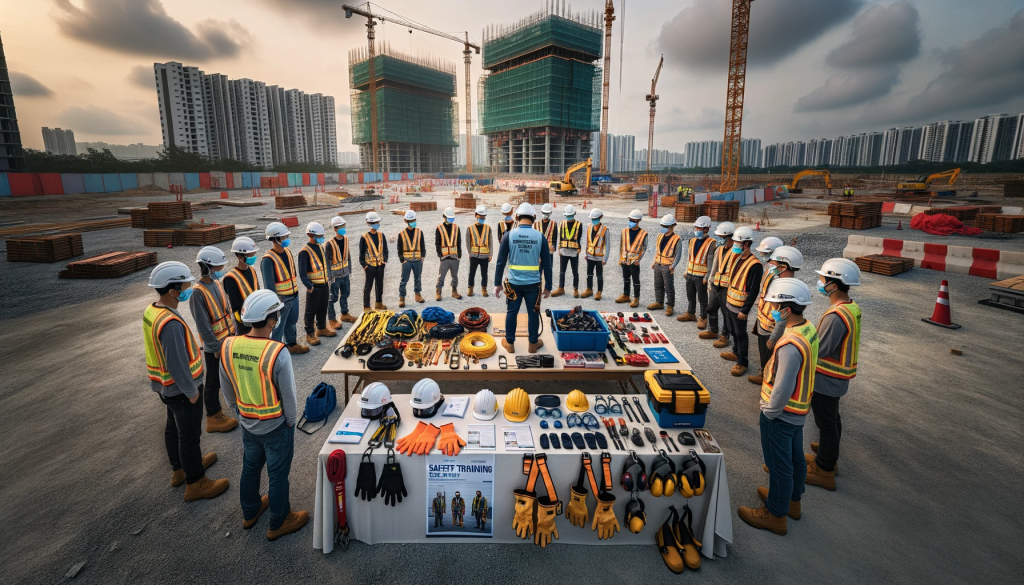
Safety is non-negotiable in construction. Proper training ensures that team members understand site safety protocols, hazard identification, equipment operation, and emergency procedures reducing the risk of accidents and the associated human, legal, and financial consequences. A workforce that trains consistently is a workforce that builds a safety-first culture, where best practices are understood and followed not because they are required, but because they are instilled.
How Continuous Training Transforms Project Performance
Training is not a one-time event it is an ongoing practice. The most successful construction organizations treat continuous learning as part of their operational DNA, building structured development programs that keep their teams sharp as technologies evolve and project demands grow more complex.
Up-to-Date Skills for Evolving Technologies
Construction technology is advancing rapidly. BIM software, project management platforms, drone surveying, prefabrication tools, and digital twin environments are becoming standard parts of the professional landscape. Continuous training ensures that your team is not struggling to keep up with tools they only half understand but instead working confidently and efficiently with the latest capabilities that drive project value.
When teams are trained on the actual tools they use daily, adoption improves dramatically. The gap between what a software platform can do and what a team actually uses it for often called the capability gap shrinks significantly when structured training is part of the workflow.
Better Decision-Making and Cross-Team Collaboration
A trained team does not just work faster it works smarter. When professionals across disciplines share a common understanding of tools, terminology, and workflows, collaboration becomes more natural and more productive. Coordinators, site managers, estimators, and designers can communicate with precision because they are all working from the same foundation of knowledge. This shared understanding accelerates decision-making, reduces miscommunication, and creates the kind of project cohesion that distinguishes high-performing teams.
Building a More Confident and Innovative Workforce
There is a less tangible but equally important benefit to consistent training: confidence. Professionals who receive ongoing development feel valued by their organizations, grow more confident in their roles, and are more willing to propose innovative approaches and take on greater responsibility. This creates a virtuous cycle where investment in people drives performance, which in turn drives the success and reputation of the organization as a whole.
MicroCAD and Global eTraining: Flexible Learning Built for Construction Professionals
Understanding the value of training is one thing finding a solution that fits the realities of a demanding construction environment is another. Construction teams are busy, geographically distributed, and often working on tight schedules that make traditional classroom training difficult to accommodate. That is precisely where MicroCAD’s partnership with Global eTraining delivers real value.
Self-Paced Interactive Training That Fits Any Schedule
MicroCAD’s Self-Paced Interactive Training platform, powered by Global eTraining, gives construction professionals the flexibility to learn on their own terms. Courses are available online, accessible at any time from any device, and designed to be completed in digestible segments that fit around work commitments. Whether a team member wants to develop a new skill during a project lull or a company wants to onboard a new hire efficiently, the self-paced format removes the barriers that make traditional training logistically difficult.
The courses are not passive video lectures they are interactive, scenario-based learning experiences designed to reinforce practical application. Learners are challenged to apply concepts in realistic contexts, ensuring that what they learn translates directly to better on-the-job performance.
Scheduled Courses for Structured Team Development
For organizations that prefer structured, cohort-based learning, MicroCAD also offers scheduled courses that bring teams through a defined curriculum together. This format is particularly effective for onboarding new hires at scale, rolling out new software platforms across a department, or building consistent competencies across geographically dispersed teams. Shared learning experiences also strengthen team relationships and create common reference points that improve daily communication.
Real-World Workflows, Practical Application
What distinguishes MicroCAD’s training from generic online learning platforms is its deep alignment with real-world construction workflows. Courses are developed with working professionals in mind, covering the tools, standards, and processes that construction teams actually encounter on the job. From Autodesk design platforms to project coordination workflows and BIM collaboration practices, the curriculum is designed to close the gap between classroom knowledge and field execution.
The Business Case: Performance, Cost Reduction, and Competitive Advantage
Beyond the direct operational benefits, workforce training makes compelling business sense. The return on investment from a well-trained construction team shows up in multiple places across the business:
-
Reduced rework and defect costs, as trained teams make fewer mistakes and catch errors earlier
-
Lower equipment and tool costs, since properly trained operators use equipment more efficiently and cause less wear and damage
-
Faster project timelines, driven by teams that work confidently and with fewer process interruptions
-
Improved bid competitiveness, as organizations with certified, skilled teams command greater client confidence
-
Higher employee retention, since professionals who receive ongoing development are more engaged and less likely to leave
-
Reduced safety incidents and the associated legal, insurance, and reputational costs
-
Stronger compliance with evolving industry standards, codes, and digital delivery requirements
Together, these benefits create an organization that is not just more profitable today, but better positioned to win and deliver the increasingly complex and technology-driven projects that define the future of construction.
Building the Workforce That Modern Construction Demands
The construction industry is facing a well-documented skills gap. As experienced professionals retire and projects grow in complexity and scale, the pressure to develop capable, technology-literate workforces has never been greater. Organizations that address this challenge proactively through structured, continuous training programs will be the ones that attract top talent, win the best projects, and build the lasting reputation that drives long-term growth.
The combination of structured learning and practical application that MicroCAD’s training programs provide is precisely what the industry needs: not just knowledge transfer, but genuine skill development that produces measurable improvements in how construction teams work. By making training accessible, flexible, and directly relevant to real-world workflows, MicroCAD makes it possible for any organization regardless of size or project type to build a more skilled, confident, and competitive team.
Frequently Asked Questions
What types of training does MicroCAD offer for construction teams?
MicroCAD offers both self-paced interactive training through the Global eTraining platform and scheduled instructor-led courses. These cover a wide range of construction-related topics including Autodesk design software, BIM workflows, project coordination, and construction management practices all designed to align with real-world industry workflows.
How does self-paced training work for busy construction professionals?
Self-paced courses are available online and accessible at any time from any device. Learners can progress through content at their own speed, pausing and resuming as their schedules allow. The interactive format uses scenario-based exercises to reinforce practical skills, making the learning experience more effective than passive video content alone.
Can training programs be customized for a specific company or team?
Yes. MicroCAD works with organizations to identify training needs and develop structured learning paths that align with the tools, workflows, and project types relevant to their specific business. This ensures that training investment is targeted and produces the most relevant improvements in team performance.
How does workforce training impact construction project quality?
Trained teams make fewer errors, work more efficiently, and communicate more effectively across disciplines. These factors combine to produce better coordination, fewer delays, and higher-quality outcomes across every phase of a project from design and planning through to construction and handover.
Is training suitable for both new hires and experienced professionals?
Absolutely. MicroCAD’s training programs are structured to serve professionals at different stages of their careers. New hires benefit from foundational courses that build competency in the tools and workflows they will use daily, while experienced professionals can pursue advanced modules that deepen expertise and expand capabilities into new areas of practice.
Trained teams boost efficiency, reduce errors, and deliver higher-quality construction results. MORE INFO
Ready to get started? Explore our classes →